|
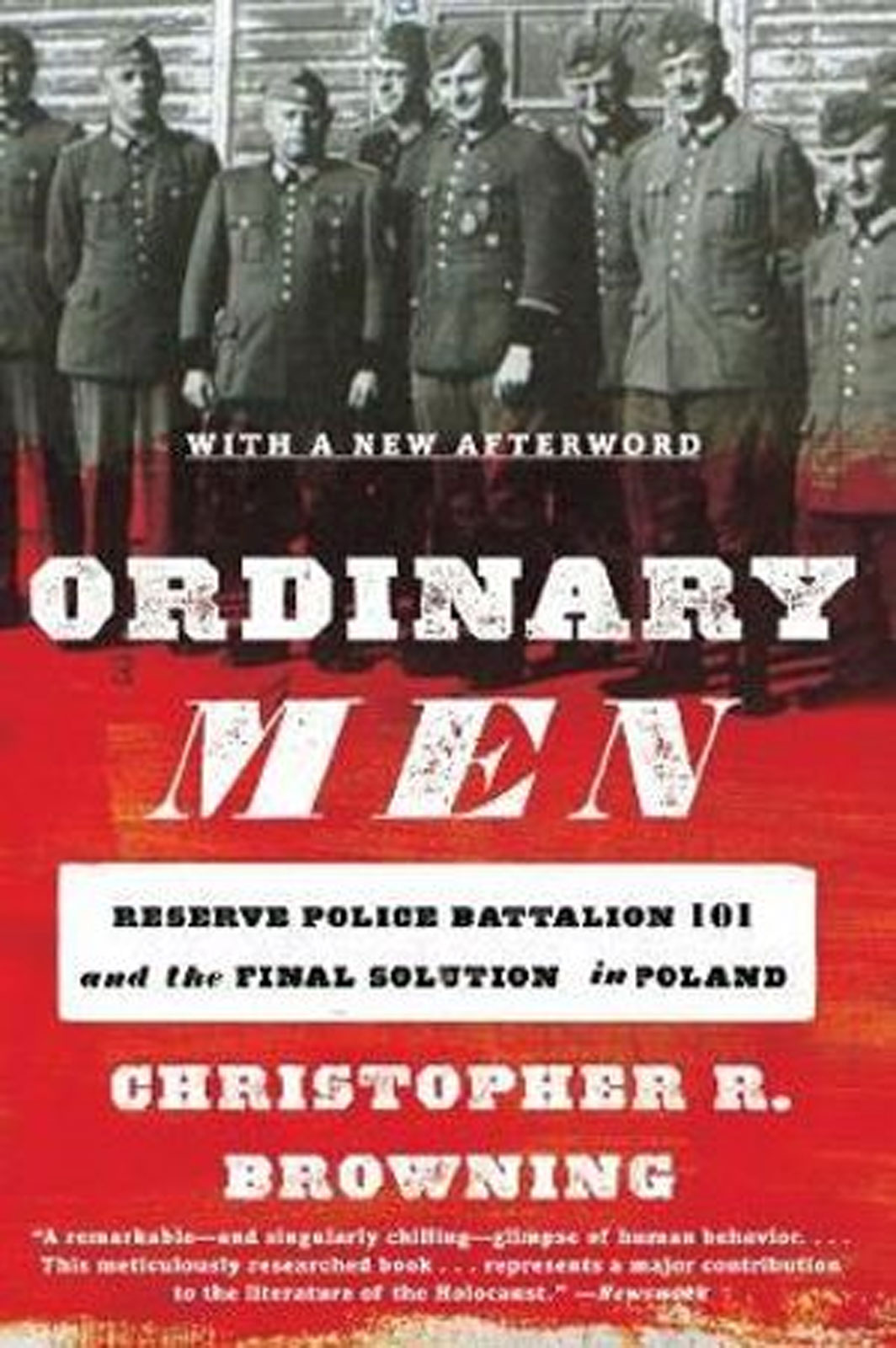
Ordinary Men by Christopher Browning |
|
Ordinary Men looks at the height of the Second World War, the German army had minimal resources to continue the war to the East with Russia, and simultaneously execute Hitler’s ‘Final Solution’. The Nazi party had already used up all of the ideological killers in their country. They were left with the dregs. They would have to use Joe the local Butcher, Jim the Primary School Teacher even Grandpa George to get the job done. The only people left all had working class jobs like truck drivers, dock workers, construction workers and machine operators. They were ‘normal people’ like you and me, but were called upon to execute millions of innocent Jews. Ordinary Men tells the story of one faction, the Reserve Police Battalion 101 and how they were transformed from normal citizen into ‘professional killers’. The First Ordeal – Jozefow Jozefow, a town in East Central Poland, in 1943 was totally quiet. The men of the Police Battalion 101 climbed down from their trucks and assembled in a half circle around their commander Major Wilhelm Trapp, a 53 year old career policeman. The time had come for Trapp to inform the men of their assignment. Pale and nervous, choking with tears in the eyes, Trapp visibly fought to control himself as he spoke. He then turned to the matter at hand with the orders from the “higher ups”. The male Jews of working age were to be separated and taken to a work camp. The remaining Jews – the women, children, elderly – were to be shot. He explained what awaited his men and then gave an extraordinary offer: if any of the older men did not feel up to the task, they could step down. After making his request, Trapp paused and waited for the reaction of the group. Some 10-12 men stepped forward to be exempt from the task, out of a total cohort of about 500. Throughout the day, an additional 10% of the policemen hid behind objects, procrastinated, or found a way out of the gruesome order. But the vast majority, proceeded with the task. The human brain managed to whip up all kinds of rationalizations and justifications for their behavior that day. The most astonishing rationalisation came from a 35 year old metalworker from Bremerhaven: “I made the effort to shoot only children. It so happened that the mothers led the children by hand. My neighbour shot the mother and I shot the child that belonged to her, because I reasoned with myself that without its mother the child could not live any longer. It was soothing to release children unable to live without their mothers”. That day they had committed crimes that they NEVER thought they could bring themselves to in their darkest of dreams. In the evening they were depressed, angered, embittered and shaken. By silent consensus, what happened on Jozefow was not to be discussed. But precisely one week after the massacre, the Battalion were redeployed to their next district for further assignment. But despite being shaken, they didn’t change their behavior. Over the following months they participated in the direct shootings of at least 38,000 and placed a further 45,000 on trains to the concentration camps. Altogether, the body count of these 500 policemen totalled at least 83,000 Jews. As the massacres continued, the men from the Battalion changed. Before the war they were normal people going about their life. When they first committed these mass murders, they were physically shaken up and depressed. After repetition of these acts, they became enthusiastic volunteers for numerous firing squads and ‘Jew Hunts’. They had transformed from your ordinary person from the local pub, into people capable of committing some of the worst crimes of human history. Post-mortem How did most of these ordinary men in the Reserve Police Battalion 101 become killers? Browning delves deep into the psychological literature to find some explanations. |
|
Search the website with Google |