|
Dai Richards – Rugby Relics
“My first real encounter with rugby as something material came almost by accident. Every November, for Guy Fawkes Night, our neighbours and my family would build a bonfire together, and as kids we would go around collecting old newspapers and anything people were willing to give us to burn. One day, somebody handed me a programme from Wales against England in 1965. I looked at it and thought, I can’t burn that. It’s too good. In many ways, that was where everything began.
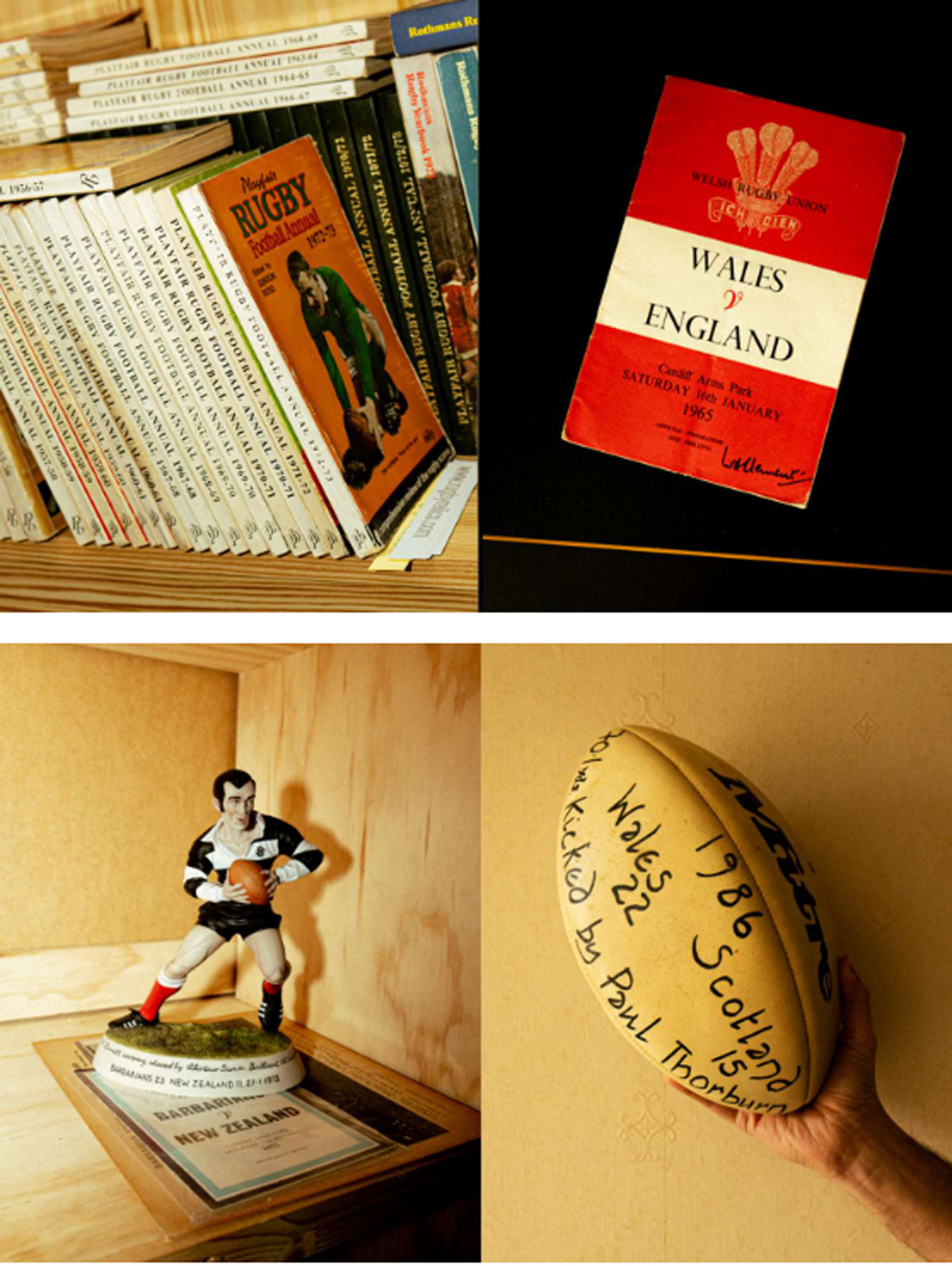
My father had probably taken me to local rugby matches before then, but I wasn’t particularly interested in watching. I would spend most of the time exploring whatever was around the pitch. But in the Welsh Valleys, rugby eventually becomes part of your life whether you consciously choose it or not. We played it at school. I scored my first try when I was nine. My teachers were rugby players; my PE teacher played for Aberavon, one of the leading sides, and so did my physics teacher. Rugby was simply everywhere. It was social, cultural, part of the fabric of the place. You couldn’t really avoid it.
During my adolescence, another relationship with the game was developing. I had started collecting football programmes, but gradually football gave way to Neath rugby club programmes and then to rugby memorabilia more broadly. When I was seventeen, I went to a dealer looking for some programmes I wanted and discovered that he had already sold them. I remember thinking: How do I get to these things first? The answer was to become a dealer myself.
Initially, buying and selling was simply a way of reaching material for my own collection before anybody else could. Then it grew and grew. That was around 1978, so I have now spent almost half a century accumulating rugby history. There is so much of it that I’ve had to hire twenty-foot containers simply to store everything. Since 1991, it has been my full-time profession. At a certain point I realised that what had begun as wheeling and dealing to sustain my own collecting could actually become a living. Today there are really two sides to what I do. There is Rugby Relics, which buys and sells, and there is the museum collection.
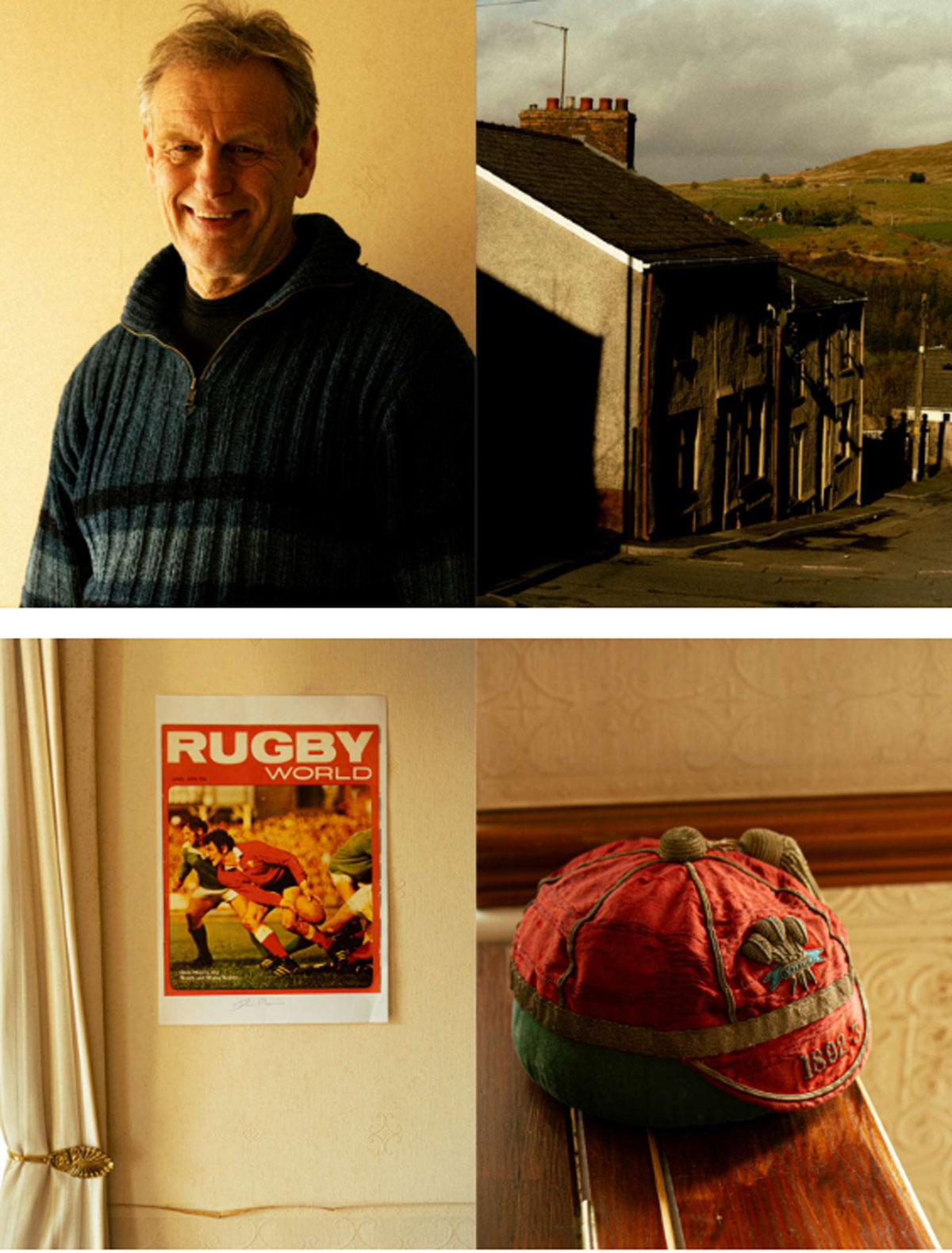
They are connected, but there is a very clear line between them. The museum material is not there to be traded. There is one exception that matters to me. If somebody has a deeper connection to an object than I do, I will consider returning it to them. If I own a cap and the son of the man who originally wore it comes to me wanting it back, then his relationship with that object is greater than mine. That matters. I need to know that the object is going somewhere it belongs, rather than to somebody who simply wants to buy it and sell it again. Because although this is a business, I still see the beauty in these things. Certain objects possess something beyond their physical form. There is an aesthetic value, certainly, but also something spiritual. And I think there has to be an integrity in the way you handle them, because ultimately you are dealing with people’s histories.
My favourite object probably explains that better than anything else. It is a small book called a Thumbograph, which belonged to a young woman in 1905. Originally, there was an ink pad inside: people would press their thumb into it, leave their thumbprint on the page and sign their name beside it. When I first bought the book from somebody in the north of England, I knew almost nothing about her. Then I appeared on a British antiques programme with it, and her granddaughter contacted me. Incredibly, she lived less than a kilometre away from me. I discovered that the house mentioned in the book was actually in Swansea and that its owner was the daughter of the Lord Mayor of Swansea. Suddenly, this object I had found hundreds of miles away had returned to its own geography.
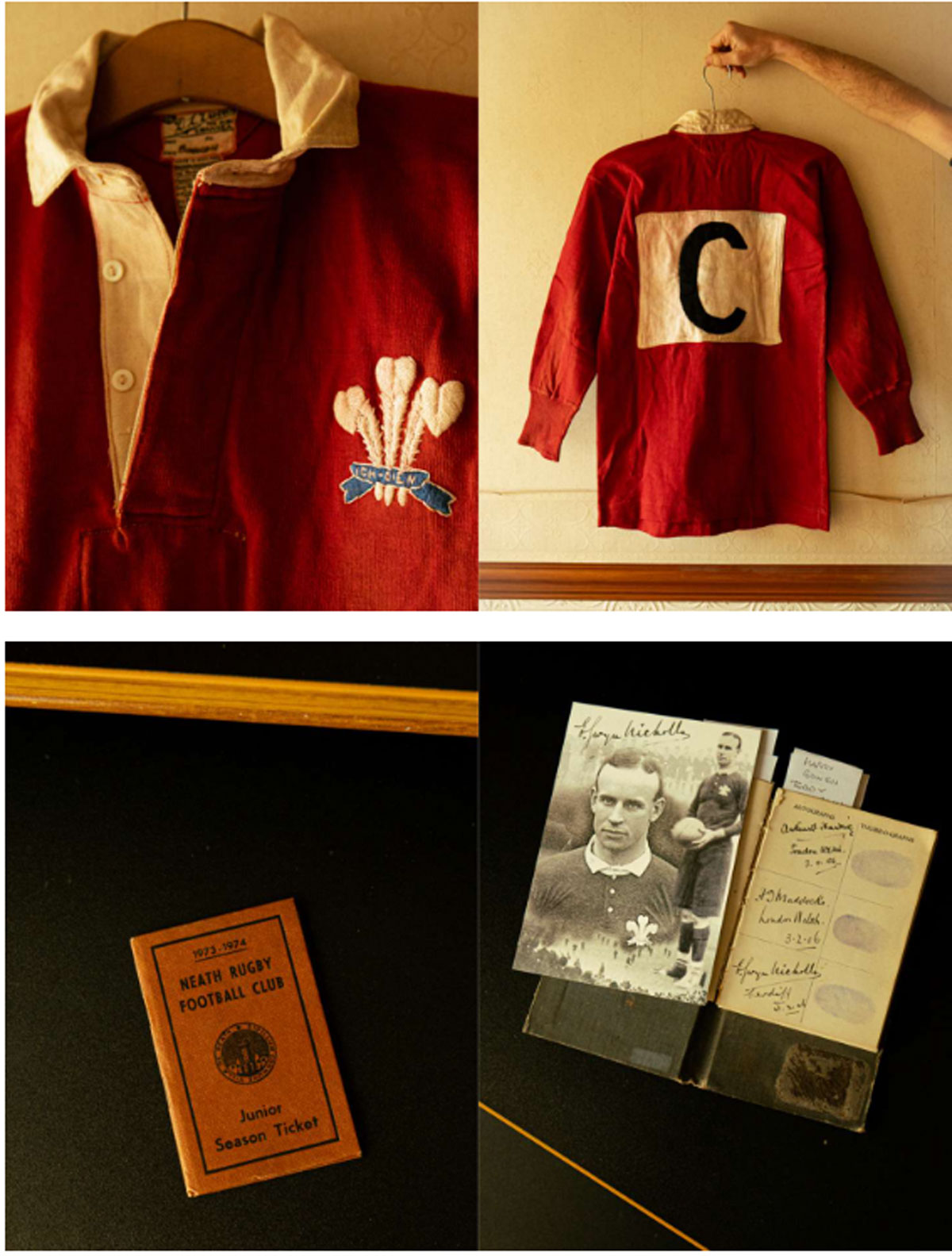
Because of her family’s position, she moved among some of the most important rugby figures in Swansea and Wales. She met members of the famous 1905 All Blacks and, the following year, the Welsh team. Ten of the Welsh players associated with that extraordinary 1905 victory over New Zealand appear in the book. Among the names is Gwyn Nicholls, the captain of that Welsh side, and then there is Arthur Gould, generally regarded as the first Welsh rugby superstar. And the book is still alive. Where blank spaces remained, I began inviting more recent players to add their own thumbprints and signatures. So an object that began with one young woman meeting rugby players more than a century ago continues to accumulate the game across generations. That is what fascinates me. The object carries time.
My collection has always been revolving. It is a business, so things inevitably come and go, but the purpose has never really been to possess everything. What matters to me is recording the history of rugby through its memorabilia, using objects to explain the story of the game. That is why I am interested in everything, not simply the great names. I have boots here from the 1880s or 1890s, the kind of boots some of those early Welsh players would have worn. And when you look at them, you have to remember that many of these men were miners. Those might have been the same boots they worked in during the week before putting them on again to play rugby on a Saturday.
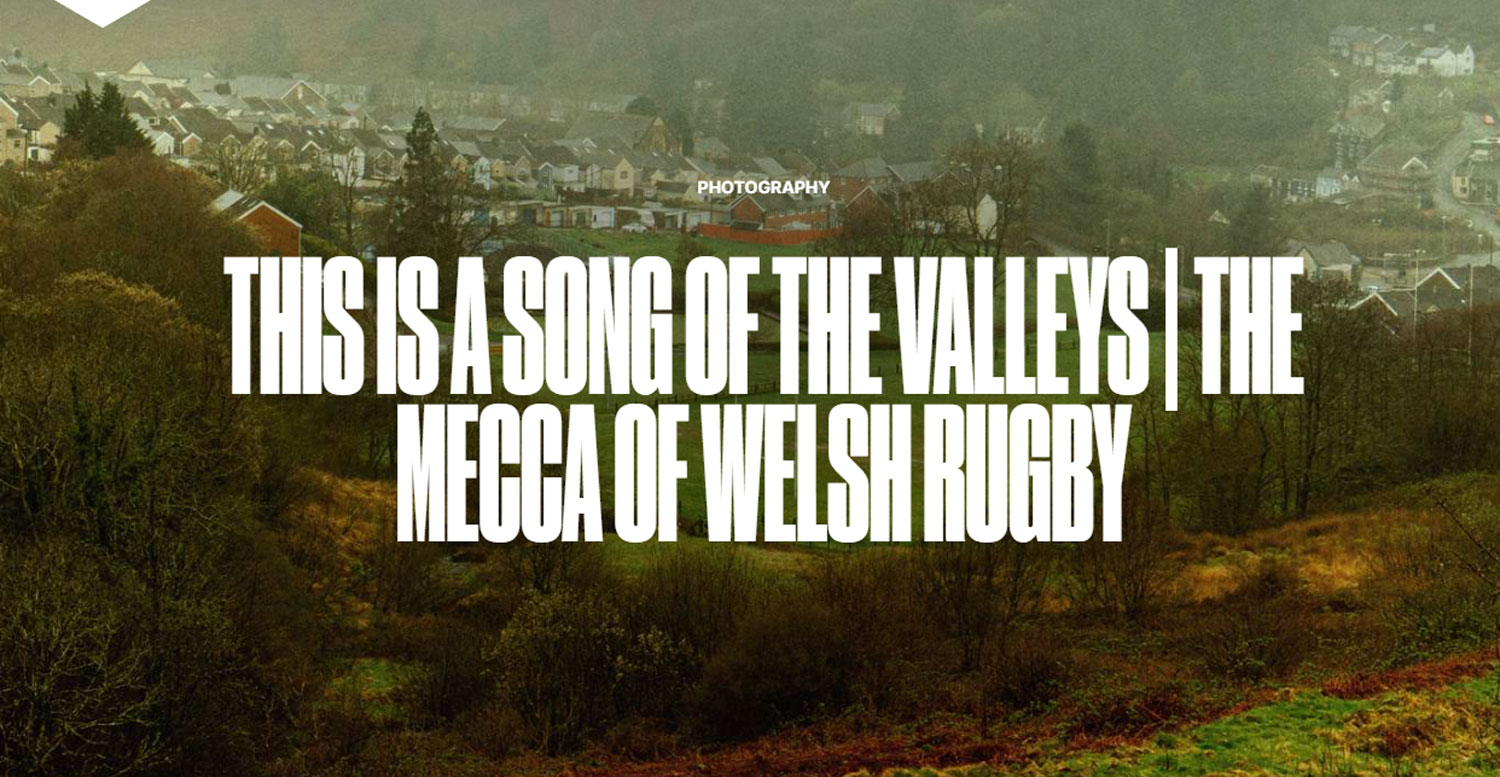
That relationship between mining and rugby is fundamental to understanding the Valleys. I grew up in Port Talbot, which was a steelworks town rather than a mining community, and I think there was a difference between the mentality of men working in steel and those going underground. Mining was harder, more dangerous. When I played in the very early 1980s, I played alongside men who had been miners, and they were hard men. Very hard men. The rugby reflected that. The team I played for never really went out to play rugby. We went to war. And that is what rugby had been like here through the 1950s, 1960s and 1970s: almost a war between mining villages, between one community and another. That mentality wasn’t naturally mine, but once you were on the field you had to enter it because everybody around you was fighting in the same way.
The mines created communities in a very particular way. People lived close to where they worked. You might walk half a mile to the mine or five miles, perhaps even climb towards one at the top of a mountain, but your work, your home and your community all belonged to the same geography. Even the coal itself was part of that intimacy with the land. In the valley opposite here, all seven layers of the geological strata come to the surface. Every seam had its own name, and they used to say that a miner could identify which seam a piece of coal had come from simply by looking at it. That world has largely disappeared. People now travel in from elsewhere to work. They are no longer necessarily born, employed and socially rooted within the same few miles. So inevitably there has been a disconnection between the communities and the mines, and rugby has been affected by that too.
The game is still deeply present in parts of Wales, particularly when you move through the Heads of the Valleys. Those remain rugby strongholds. The coastal towns are different. Historically, rugby belongs much more intimately to the mining communities and the Valleys. But even here the balance is changing. I would say rugby is dying in terms of participation. My old club is struggling to field one senior side now. At one time, it ran two. Part of the problem is simply the nature of the game. Rugby is a contact sport, and people have jobs and lives outside it. It is difficult to put your body through a match and then return to physical work. When I played, it could take me two or three days to recover, and I wasn’t even a forward. Society has changed as well. I think we are moving away from that kind of contact sport. Perhaps that is one reason I have become increasingly interested in going backwards, towards the origins of the game itself.”
|