|
EAST GLYNNEATH RESIDENTS AGAINST CONTAMINATION PROGRESSIVE SUPRANUCLEAR PALSY - PSP POTENTIAL CLUSTER GLYNNEATH |
|
My name is David Richards and
I am the spokesperson for the East Glynneath Residents Against
Contamination group. The group is around 30 adults strong from 20 residential
properties surrounding a historical industrial landfill site (1999-2017). The majority
of the group are 70-98 year olds who have been cut off from communicating
with the local government (council) during the COVID19 pandemic because they have no
internet access. I have been representing them in placing objections
against a housing development being built on the former landfill site.
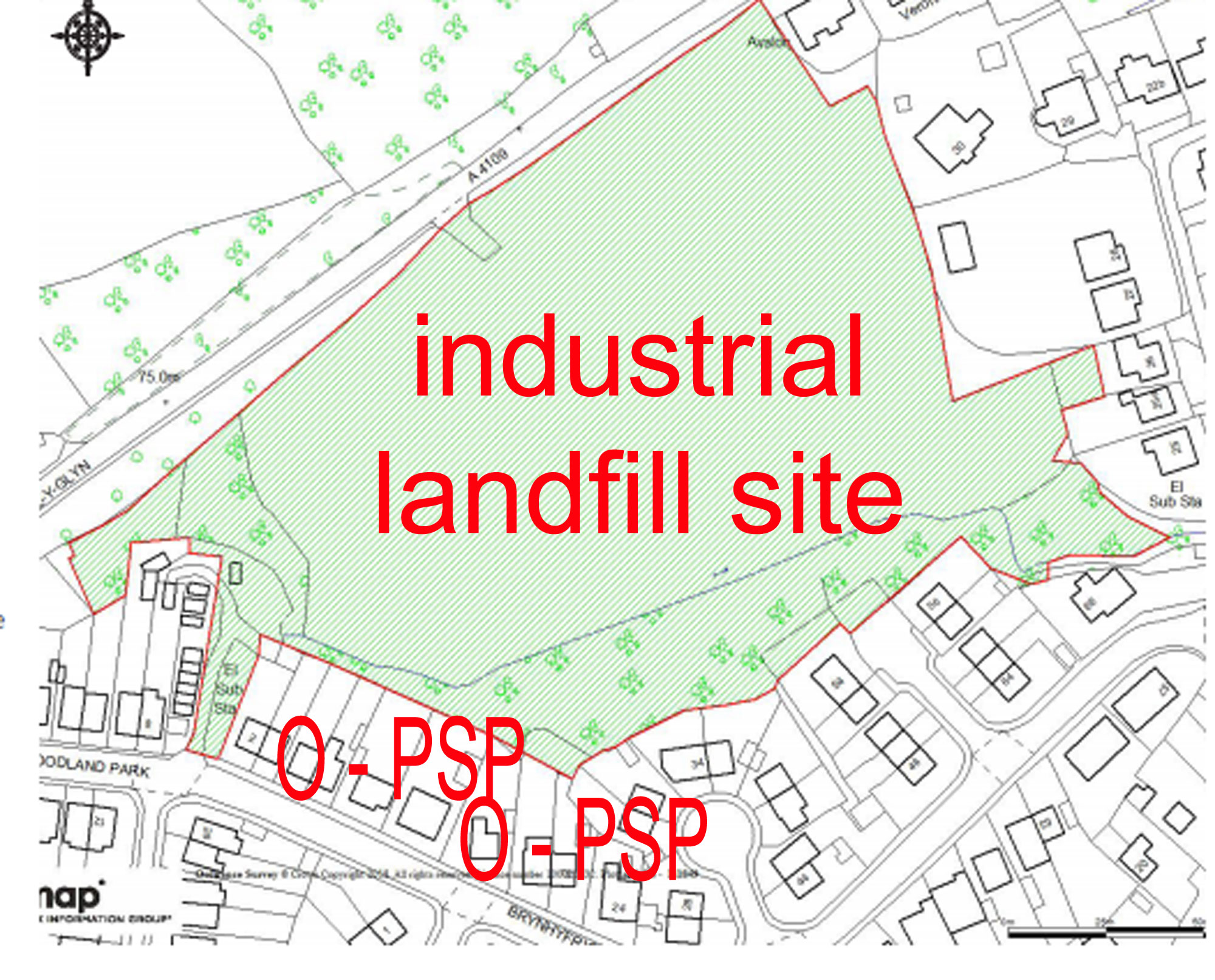
I was made aware of PSP in early March 2021 on a FB post by the daughter of a deceased parent of one of the group. She indicated that a near neighbour also part of the group had died of the same disorder, PSP. I undertook initial research on the subject and found that it was a rare disorder and that a potential cluster had occurred in our street. I took relevant references and information from my initial research and added them to my subject log about the Heol y Glyn Housing Development, Glynneath. Our street 'Brynhyfryd' borders that development. Brynhyfryd is a street of 62 houses, 17 of which border the development directly. I have not undertaken extensive research into the illnesses and disorders of the complete street or the 17 houses but already have identified within those 17 houses 2 deaths from PSP, several instances of cancer deaths, sudden heart attacks, a birth mutation and another extremely rare neurological disorder https://en.wikipedia.org/wiki/Superficial_siderosis which we think may have an overlapping PSP condition.
|
||||||
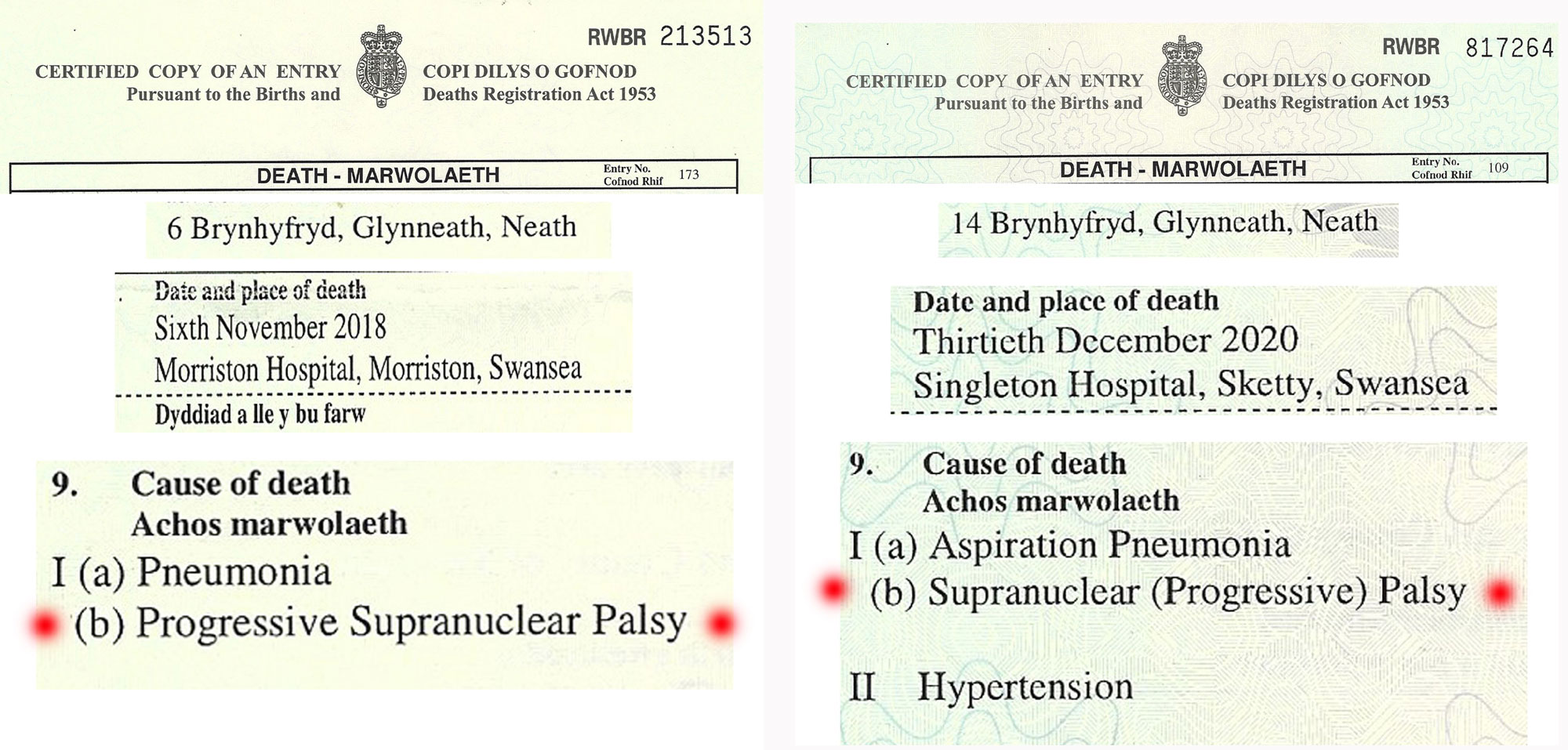
| In early April I confirmed the cause of death of the two residents by collecting resident testimonies and death certificate information. Both residents died of pneumonia and progressive supranuclear palsy. On the 4 April 2021 I created a sub-section on the Heol y Glyn development section of the website dedicated to PSP. | ||||||
|
locations & death certificate relevant information I have found that the chances of 2 cases of PSP happening within 50 metres of each other are extremely rare but happening on the edge of an industrial landfill site known to be contaminated with arsenic and chromium with the initial symptoms arising when the site was at its most active I would say confirms the Wattrelos conclusion that PSP is related to ground contamination. I have no academic or science background but have published a book on the origin of sport. Two of my children have a PhD in chemistry. Victoria Richards is the chief editor of the Nature journal Chemistry Communications and Simon Thomas has recently completed his PhD and had contributed a chapter to Volume 43 of Organometallic Chemistry published by the Royal Society of Chemistry. They have different names, because they have different mothers, I'll leave you to work out the genetic implications. We are currently in a stand off with all government agencies and officials who have previously broken the contaminated land protocol in 2010 and left the land untreated and refuse to provide further information relating to the testing at the site. The purpose of this communication/page is to attempt to find members of the science community with a specific interest in PSP that can support our community in any way possible. I have the following ideas which may or may not be suitable, I'll be happy to adjust, change or work with any other suggestions relating to a co-operated effort. I would be happy to work as a resource to be led in gathering information and presenting information to the public of our town if this case is of interest.
" DEVELOPMENT BACKGROUND The housing development is to be built on a traditional domestic council 'ash tip' landfill site (1940-1970) and an industrial waste landfill site (2003-2016) of one of the world's largest demolition companies (Cuddy Group Ltd - you tube video - CLICK HERE). It is believed that the housing development was a front for the tipping of industrial waste, the housing development company set up by the Cuddy Group failed to build a house during its entire existence. Limited chemical testing was undertaken in 2008 finding an above regulation levels of asbestos, benzo[a]pyrene and zinc. A risk assessment was undertaken showing a source to receptor links and a remediation strategy submitted. This test was then hidden in the council archives until found by us in 2020. Information relating to this process can be found here. EAST GLYNNEATH - RESIDENTS AGAINST CONTAMINATION - REPORT SUBMITTED TO THE PLANNING COMMITTEE ON 5/9/2020 - CLICK HERE Other very limited testing has taken place recently but the local council and Welsh Government regulatory authority Natural Resources Wales are refusing to provide any information, both government agencies have cut direct communication with our group. RESOURCES - CUDDY TIPPING HABITS YOUTUBE VIDEO - A video that shows the tipping a habits of the Cuddy Group and how local council officials have enabled them to do this. - CLICK HERE My research notes can be found below and on the linked pages: |
| 5/4/2021 | NHS - PSP overview - CLICK HERE - The UK Government National Health Service's view of PSP | |
| 5/4/2021 | My initial research identified
Wattrelos in France as the only previously identified cluster of
PSP. There were many similarities with the Glynneath cluster and
so I headed back to the following paper for the relevant
information.
A geographical cluster of progressive supranuclear palsy in northern France https://www.ncbi.nlm.nih.gov/pmc/articles/PMC4617163/ The conclusion of the paper is as follows: Conclusion: We have identified a cluster of PSP in a geographical area with severe environmental contamination by industrial metals. This it would seem is the first paper to identify a geographical cluster of PSP, a google search (down to the end of page 4) of the term "progressive supranuclear palsy cluster" ( CLICK HERE for additional notes ) has found that similar conditions resembling PSP are common in Guam and Guadeloupe and there was one reference to a study in Luxembourg that showed a higher prevalence of PSP than normal which was potentially attributed to the steel industry. I could see no other references to a PSP cluster and the Wattrelos cluster featured regularly with the search term. I believe the Wattrelos paper has enough evidence to link the clusters together, both chromium and arsenic have been found in tests at the Brynhyfryd landfill site and coincidentally with the Luxembourg paper the demolition company that previously owned the site had contracts within the steel industry and chemical industry. The youtube channel CLICK HERE of the demolition company shows some of the demolition locations - CLICK HERE. I have taken the following quotes from the paper which I believe are relevant to our cluster: "Wattrelos is a town in northern France where textile dyeing plants and tanneries operated for most of the 20th century, using arsenic and chromate from the nearby chemical plants. Arsenic and hexavalent chromium contamination have been documented in the soils of the sites of former plants in Wattrelos and Leers, where the cluster of PSP cases described in this report live." "Arsenic, a potential neurotoxin, has been found in the soil at the sites of the former chemical plants in Wattrelos and is present in the phosphate ore formerly processed there, as described also in [Arsenic pollution in Multan] Pakistan. Contamination with chromium is common in Wattrelos, but we consider it to be a less likely candidate as a neurotoxin although a synergistic toxicity with arsenic is possible." Also I have read other papers relating to PSP this is the most relevant to our case and I believe that when compared, there are enough similarities to conclude they are related. OTHER RESEARCH UNDERTAKEN - CLICK HERE Therefore my first step is to seek advice from the scientific community on how to move forward. My primary concern at present is the probability that a housing developer will move in and disturb the land thereby potentially creating airborne contamination endangering the lives of my family and community. |
|
Apologies for my extremely amateur approach. If you would like to contact me to talk further about this subject my contact details are below: email: dairichardswales@gmail.com Tel: +44 1639 729000 - +44 797 457 4167 66 Brynhyfryd, Glynneath, Neath, SA11 5BA, U.K.
|
| Alwyn Phillips & Tegwyn Allen partner testimonials & death certificate evidence - YOUTUBE VIDEO CLICK HERE |
|
PSP youtube animated video explanation - very detailed CLICK
HERE
|
Contact with the science community:
| : |
|
Subject: new PSP cluster identified in south Wales town, UK. - Progressive
Supranuclear Palsy My name is David Richards and I am the spokesperson for group of residents in the south Wales town of Glynneath, U.K. I believe we have identified a new PSP cluster in our town. There are 2 cases, 50 metres apart bordering an industrial landfill site. Symptoms were identified in both patients in a 2 year period when the landfill site was at its most active, arsenic and an unspecific form of chromium are known to exist on site. I have not undertaken research into PSP within the extended community yet or made this information public locally, there may well be more cases. Before I do this I am looking for members of the scientific community who have an interest in PSP to work with our group to the mutual benefit of both parties. I have laid out the evidence and information I have so far in relation to these cases along with my methodology for establishing this 'potential' PSP cluster on a website. This can be found by clicking on or pasting the following link into your browser. I look forward to hearing from you if this subject is of interest. http://www.walk-around-wales.com/county/npt/glynneath/enzo-development/psp/b-psp-research-notes.htm regards - David Richards |
|
Email 1 sent on or about the 7 April 2021 to the following 2 lead authors
in the Wattrelos paper:
Wattrelos paper contributors 1 & 2- https://www.ncbi.nlm.nih.gov/pmc/articles/PMC4617163/ |
|
Dr. Caparros-Lefebvre: dcaparroslefebvre@gmail.com |
|
Lawrence I Golbe M.D. https://eohsi.rutgers.edu/eohsi-directory/name/lawrence-golbe/ - golbe@rutgers.edu
|
|
Dear Mr. Richards, Thank you for bringing this potential PSP cluster to my attention. Dr. Caparros-Lefebvre emailed me to say that you've contacted her as well. The combination of chromium and arsenic compounds in the area, as is the case for the French cluster, is highly suggestive and justifies further study. The first thing I suggest is an informal survey all of the neurologists and geriatricians in your area to ask if they have encountered anyone with PSP in the past few years. The best person to do this would be a researcher who could obtain the necessary human subjects research permission. If you haven't already contacted Professor Huw Morris at University College London, I suggest you do so or allow me to do so. He is one of the leading neurologists in the UK and a world leader in the study of PSP. (As you would guess from his name, he is Welsh himself.) I have worked closely with him on several projects. https://www.ucl.ac.uk/ion/people/huw-morris. I'm sure that he or someone under his supervision would receive a warmer reception than a foreigner or a non-professional. Depending on the number and location of additional cases identified, the next steps can be planned. As I'm sure you're aware, it's very difficult to know if two cases of PSP on the same street, even a street bordering a toxic site, have a common environmental cause or are merely coincidence. That's also true of the cluster of other unusual neurological diagnoses that you mention. The branch of epidemiology called "cluster analysis" deals with this difficult issue. But before cluster analysis is applied, one needs to try to find as many cases or suspected cases as possible. I should tell you that in Wattrelos, there have been no new cases of PSP since 2016. In 2015, the town's mayor closed a community vegetable garden that was only a few yards from the chromate and phosphogypsum dumps (I think you call them "tips"). You might start to make inquiries into the origin of vegetables that the people in East Glynneath consume. If you have not already contacted Prof. Morris, I'd be glad to do that for you. In any case, please keep in touch. I'm very interested in helping as I can. I don't think it's too early to congratulate you on the progress you've made so far in the fight against PSP and by extension, all of the neurodegenerative disorders. Best, Lawrence I. Golbe, MD Emeritus Professor of Neurology Rutgers Robert Wood Johnson Medical School New Brunswick, NJ golbe@rutgers.edu 732-986-3453 Chair, Scientific Advisory Board and Director, Clinical Affairs CurePSP New York, NY golbe@curepsp.org 347-294-2873 |
|
|
|
Dear Professor Golbe Thank you for you early reply, I have only emailed yourself and Dr. Caparros-Lefebvre so far and its good to know that you have an interest in learning more. I would be happy for you to contact Professor Morris about this subject and if he or you or he are willing to take the lead on the investigation into a potential cluster that would be fantastic. I will make myself available for any task either of you would require me to perform. I will double check with the two cases in the street as to whether or not they grew their own vegetables but the majority of people I would suggest buy their fruit and veg from national chain supermarkets, This is something I have been aware of since the contamination on the site was first identified and I have been asking residents if they grew their own if the opportunity arose, very few do. The landfill site is elevated above our properties and the groundwater on the site generally flows in the direction of the houses. I stopped eating the wild strawberries growing around my property since I discovered this. Once again, thank you for your interest and taking the time to reply, I hope to hear from yourself or Professor Morris at sometime in the future. - Dai (short for David) Richards |
|
Dear Professor Golbe I have double checked with the partners of the deceased PSP deaths and they have confirmed that they did not grow their own fruit and veg for consumption. They are also pleased that someone such as yourself has taken an interest in this case. Re-reading my last email I felt it was possibly ambiguous so I hope that I can make myself clearer, I have copied Professor Morris to this email. I have no intention of canvassing the thoughts or others from your community or moving forward locally with an attempt to identify other cases of PSP until I have had a definite yes or no or referral from yourself or Professor Morris as to whether or not you would like to take on the opportunity of identifying this potential cluster. In my research I have identified that the company who owned the site colluded with the local council planning department to breach the UK's Environmental Protection Act in 2010 leaving at least arsenic, benzo[a]pyrene and zinc contaminants in the soil. The chemical testing of the site was not extensive enough so the full extent of the contamination at the site is unknown and much has been tipped there since this date. Our problem is that the local government are covering up the EPA breach and this is where our fight is to prove their malpractice. If we can link or at least provide a probable link from the contamination to the PSP then its strengthens our case for a full investigation in the site. It is my intention to present a case to the police within the next couple of weeks based upon the breach of the Environmental Protection Act and to provide the PSP death certificates as evidence of potential linked deaths to the breach. As mentioned previously I am happy to help in any way if you or Professor Morris wish to research a potential cluster but for our immediate needs would it be possible for either of you to make an 'off the record' statement that we could present to the police as part of our case that the PSP cases in Brynhyfryd are/may be potententially / likely / probably linked to historical contamination at the site based upon the Wattrelos cluster info etc. I have a small budget available if this needs to be considered. regards - Dai Richards |
|
Dear Dai, Thanks for being in touch. I’m sorry to hear about this and it sounds like the environmental exposure side of things needs to be investigated. The best thing is for you to notify public health and previously in the UK I know they have very thoroughly investigated similar potential clusters of Parkinson’s. It may be difficult to prove anything with PSP as things stand - but public health will be able to identify all the cases diagnosed over the relevant period. The prevalence of PSP is around 10/100,000 and of course there is a lot of random variation around that figure. Best Huw. |
|
Dear Dai: Dr. Morris' advice is sound and I second it. As for your request for a formal letter or informal "off-the-record" opinion attesting to the likelihood that the two cases of PSP were causally related to the toxic dump: There is just not enough information at present, unfortunately. The analogy with the cluster in France is far from solid because the toxins that you say were the ones known to be at the Glynneath site (arsenic, benzo[a]pyrene and zinc) do not overlap with those known to be present at the French site (chromium, nickel and cadmium). Of course, at both sites there are bound to be others, but we don't yet know what they may be. Furthermore, we don't know if the two cases at Glynneath are part of a statistically significant cluster or merely a coincidence or possibly a result of ascertainment bias. Another, albeit lesser, issue is the accuracy of the diagnosis of PSP: Some of the 100 members of the French cluster had had autopsies proving the diagnosis; I examined some of the others myself; and all of them had been confirmed by a neurologist whom I know and trust. None of this applies to the two patients in Glynneath. The bottom line is that there's not enough certainty about this for me to attach my name to an opinion one way or the other. Please keep me informed of any progress you may make with the public health authorities. I'd be glad to speak or email with any UK public officials about this, but I'd only tell them exactly what I've just told you in the paragraph above. Best, Dr. L. Golbe |
| Dear both - apologies if I got your titles incorrect in the previous emails. Thank you both for your input and information about PSP, our main problem with the enviromental heath (Natural Resources Wales) is that they are working closely with the loacl council on covering up the identified contamination, a recent study identified chromium at the site but they refuse to identify which form of chromium it is, if hexavelant then the amount specified in the results is dangerous to health, we'll continue to fight on though. Once again I really appreciate that you've taken the time to respond and thank you both for your in depth responses. I wish you well for the future. Thanks again. - Dai |
|
Search the website with Google |